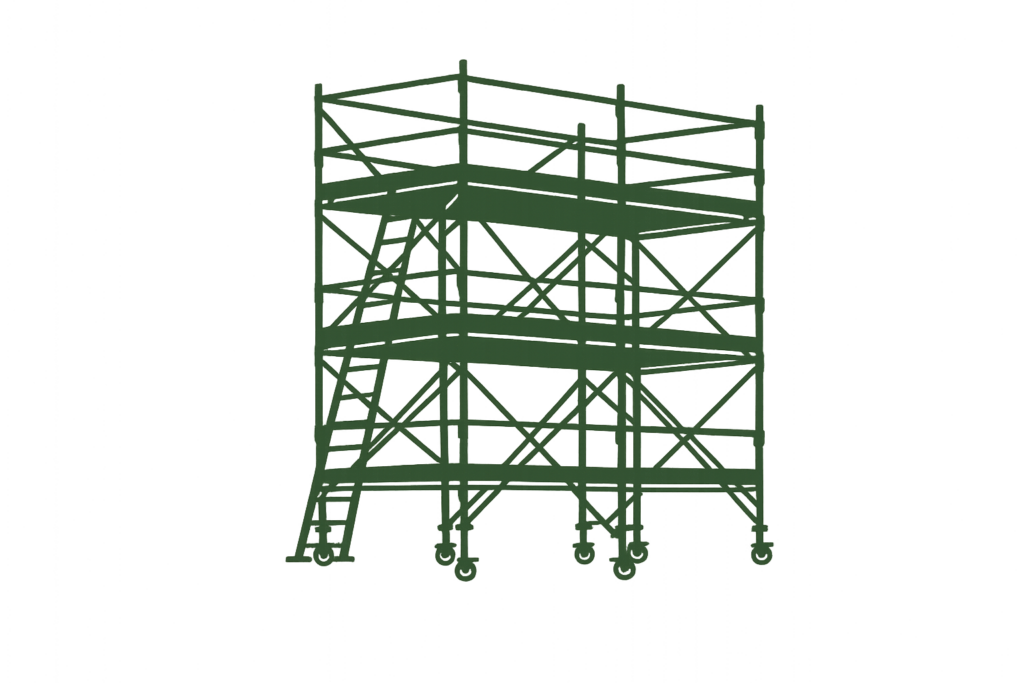
If you are dealing with a chimney issue, whether that is loose brickwork, failing mortar, or something more serious that needs proper repair, you will very quickly run into the same requirement that most homeowners face: you need safe access, and that usually means chimney scaffolding. What often catches people out is not the repair itself, but the cost of getting access in the first place, because chimney scaffolding is rarely as simple or as cheap as standard access along a wall.
You are not just paying for height. You are paying for a structure that has to work around the highest and often most awkward part of your home, which means the price reflects more than just materials. It reflects planning, labour, safety, and the way your property is laid out.
So instead of giving you a vague number, this guide walks you through real UK pricing, explains what actually drives the cost, and helps you understand how to approach your quote with confidence rather than guesswork.
How much does chimney scaffolding cost in the UK?
For most homes across the UK, chimney scaffolding typically costs between £500 and £1,200, although in some cases it can go higher depending on the setup required and the difficulty of access. These figures are based on patterns seen across multiple UK pricing guides and contractor estimates, where chimney access consistently sits above standard scaffolding costs due to the added complexity involved.
For a straightforward chimney stack on a standard two-storey house where access is relatively easy, you will often see prices between £500 and £800, especially where the scaffold can be built directly from the ground without major adjustments. Once you move into more complex situations, such as chimneys positioned centrally on the roof or properties with limited access, costs tend to rise into the £800 to £1,200 range or beyond.
What makes chimney scaffolding different is that it is rarely just a simple vertical structure. It often involves bridging over the roof or creating a platform that allows safe movement around the chimney, which increases both time and materials.
Why is chimney scaffolding more expensive than standard scaffolding?
When you look at a chimney from the ground, it might seem like a small part of the house, but from a scaffolding perspective, it is one of the most complex areas to reach because it sits at height and often away from direct ground-level access. That combination creates challenges that do not exist with standard wall scaffolding.
The cost increases because the scaffold needs to do more than just stand upright. It often needs to extend, bridge, or adapt to reach the chimney safely while maintaining full stability. That means additional components, more time spent on assembly, and greater attention to safety throughout the process.
Several elements combine to increase the cost:
- Extra labour, as scaffolders need more time to plan and build a safe working scaffolding platform at roof level
- Additional materials, including beams and supports that allow the scaffold to reach over or around the roof
- Higher risk, which requires more secure construction and careful inspection
Once you understand these factors, the price starts to feel less like a mystery and more like a reflection of what is actually involved.
What factors affect the cost of chimney scaffolding?
Although the average ranges give you a useful starting point, your actual cost depends on how your property and your project fit into those ranges, because small differences in layout and access can create noticeable changes in price.
Where is your chimney located?
A chimney on the edge of the roof is much easier to access than one positioned in the centre, because scaffolders can build directly up from the side of the property without needing to extend across the roof. When the chimney sits centrally, the scaffold often needs to bridge over the roof, which adds both complexity and cost.
How high is your property?
Height increases cost in a direct way, because every additional level requires more materials and more time to build safely, and it also increases the level of risk that scaffolders must manage. A two-storey house is usually manageable within standard pricing, but taller properties push costs higher quite quickly.
How easy is access to your property?
Access is one of the most overlooked factors when it comes to scaffolding costs, because if scaffolders can park nearby and move materials easily, the job becomes much faster. If they need to carry equipment through narrow passages, over obstacles, or across longer distances, the extra time adds to the overall cost.
Does the scaffold need to go over a conservatory or extension?
If your property has a conservatory or extension below the chimney, the scaffold may need to be designed to avoid placing weight directly on that structure, which often means additional supports or bridging techniques. This adds both time and materials, which increases the price.
Where is your property located?
Location plays a consistent role in pricing across the UK, with areas like London and the South East typically seeing higher costs due to increased demand and operating expenses. In other regions, prices tend to be lower but still follow the same general structure.
How long is chimney scaffolding usually needed for?
For most chimney repair jobs, scaffolding is typically required for one to two weeks, although the hire period included in your quote is often longer, usually around six to eight weeks. This built-in flexibility allows for delays without immediately triggering additional charges, which is helpful when working at height where weather can affect progress.
The key thing to understand is that you are not usually paying extra weekly charges during this initial period, but if the scaffold remains beyond that timeframe, additional costs may begin to apply.
What work usually requires chimney scaffolding?
Chimney scaffolding is not just for major structural repairs; it is used for a range of tasks where safe access is required at height, and each of these jobs relies on having a stable working platform.
Common examples include:
- Repointing chimney brickwork, where mortar needs to be removed and replaced safely
- Repairing or replacing flashing around the base of the chimney
- Installing or fixing chimney pots and cowls
- Removing or rebuilding damaged chimney stacks
Each of these tasks requires steady access and proper footing, which is why scaffolding becomes essential rather than optional.
Can you reduce the cost of chimney scaffolding?
While you cannot remove the need for scaffolding in most cases, you can influence the overall cost by focusing on how the work is planned and carried out rather than trying to reduce the structure itself.
- Combine chimney repairs with other roof work so the scaffold is only installed once
- Ensure access is clear before installation to reduce labour time
- Confirm the hire period so you understand how long is included in the price
These steps do not change the complexity of the scaffold, but they help avoid unnecessary costs that come from delays or repeated setups.
How do you know if your chimney scaffolding quote is fair?
When you receive a quote, it helps to compare it against typical UK pricing ranges, because although every job is different, most chimney scaffolding costs fall within a predictable band once you account for height, access, and complexity. If your quote sits between £500 and £1,200 for a standard domestic property, it is generally in line with what most homeowners pay.
If the price is higher, there is usually a specific reason behind it, such as restricted access or a complex roof structure, and asking for a breakdown can help you understand whether the cost reflects those conditions.
Can a scaffolding cost calculator help with chimney projects?
A scaffolding cost calculator can give you a useful estimate before you request quotes, helping you understand how factors like property size, scaffold type, and location influence the price. While it will not replace a detailed quote, it gives you a clearer starting point and helps you approach contractors with realistic expectations.
When you combine that estimate with an understanding of how chimney scaffolding works, you can plan your project more effectively and avoid unexpected costs.
What do real UK pricing guides say about chimney scaffolding costs?
To make this guide more reliable, the pricing ranges and explanations used here reflect consistent patterns found across several high-ranking UK resources that focus on scaffolding and home improvement costs. While each source presents the information slightly differently, the underlying figures and structures remain consistent when compared directly.
These sources include:
- PriceYourJob – Scaffolding Costs Guide, which outlines typical domestic pricing ranges
- Checkatrade – Scaffolding Cost Guide UK, which reflects real homeowner quotes
- MyBuilder – Scaffolding Cost Advice, based on contractor insights
- HouseholdQuotes – Scaffolding Prices UK, comparing scaffold types
- HomeHow – Scaffolding Cost Breakdown, with structured pricing examples
Across these sources, chimney scaffolding consistently appears as a higher-cost category compared to standard access scaffolding, due to the additional complexity and materials required.
Final thoughts
When you look at chimney scaffolding properly, the cost becomes easier to understand because it reflects the challenge of reaching one of the highest and most awkward parts of your home safely. The average price sits within a clear range for most properties, but the final figure always depends on how your specific job is set up and what is required to make it safe.
By understanding what affects the scaffolding cost and how pricing is structured, you can approach your project with more confidence, avoid unnecessary surprises, and make decisions that keep your budget under control. If you want a clearer idea of what your chimney scaffolding might cost before you begin, using a scaffolding cost calculator can help you connect the numbers to your property and your project, giving you a plan that feels realistic rather than uncertain.


