Scaffolding Weight Calculator

Work out an estimated scaffold weight before you move on to detailed planning. This page helps you understand how scaffold size, height, boarded lifts, platform width, and common extras can affect the overall weight of the structure.

Instant Estimate

Scaffolding Weight Calculator

Estimate the approximate self-weight of a scaffold based on scaffold type, shape, size, boarded lifts and common extras. This is useful for early planning and loading discussions before a formal design or engineering check.

Total length of the scaffold run around the structure.
Used to estimate the number of vertical lifts.
Number of lifts with boarded working platforms.
Please complete all required fields before calculating.
Weight Estimate

Estimated Total Weight

0 kg
0.00 tonnes
Estimated Bays0
Estimated Lifts0
Base Structure Weight0 kg
Boarded Platform Weight0 kg
Shape Multiplier1.00x
Extras Weight0 kg
Total Weight0 kg
This is an approximate scaffold self-weight guide only. It does not include live loads from operatives, stored materials, wind loading, ties, foundation checks, or project-specific engineering requirements.

Need a quote as well?

Add the weight estimate to the quote link so the enquiry carries the key scaffold details with it.

Weight estimate details added to the quote link.

How Scaffold Weight Is Worked Out

Scaffold weight can increase faster than many people realise, because the finished structure includes far more than just the main standards and ledgers. Once lifts, boards, braces, guardrails, toe boards, and access sections are added, the total material weight can become substantial even on a fairly ordinary setup. A scaffold weight calculator helps give a clearer estimate before you move into more detailed planning.

For a typical scaffold, the final weight is shaped by the overall run length, the working height, the number of boarded lifts, the platform width, and the style of scaffold being used. A smaller straight access scaffold will usually come out lighter, while larger wraparound arrangements, birdcages, and temporary roof systems will normally produce a much higher figure because they use more material across the whole structure.

What Has the Biggest Effect on Weight?

The main factor is the overall size of the scaffold. Longer runs need more bays, taller builds need more lifts, and each additional section increases the amount of tube, board, bracing, and fittings required. As the dimensions grow, the estimated weight rises with them because more scaffold components are needed throughout the build.

The scaffold layout also plays a big part. A straight run will usually weigh less than an L-shape or full wrap because the structure covers less area and uses fewer materials. On top of that, extras such as ladder access bays, loading bays, and debris netting can all increase the final estimate, which is why two scaffolds with similar heights may still end up with very different weight totals.

Typical Weight Differences for Common Scaffold Setups

Different scaffold arrangements can vary a lot in weight. A short straight run used for light access work will often stay at the lower end of the estimate, while a full wrap scaffold around a property will carry much more weight because it uses more bays, more boards, and more structural components throughout the setup.

Heavier systems such as birdcage scaffolds and temporary roof scaffolds usually come out with much larger totals because they involve extra framework, more coverage, and a denser overall build. By comparison, a smaller independent scaffold with fewer lifts and narrower boarded platforms will often remain much lighter. That is why the calculator works best when it is based on the actual layout rather than a rough guess.

How Height, Length, and Boarded Lifts Change the Total

As soon as the scaffold gets taller or longer, the weight starts to climb. More height means more lifts, and more length means more bays. If additional boarded lifts are included, that adds another layer of materials because every working level needs boards and the support to carry them. Wider platform widths can increase the figure further by adding more boards across each lift.

This is why scaffold weight cannot be judged properly from appearance alone. Two structures may look broadly similar at first glance, but once the boarded lifts, run length, height, and platform width are taken into account, the overall material weight can be very different. Those details have a direct effect on how much scaffold is actually being built.

Why a Scaffold Weight Calculator Is Useful

A scaffold weight calculator is useful because it gives you a practical estimate early in the planning stage. That can help with transport planning, loading discussions, site preparation, and a better general understanding of the scale of the scaffold before a more detailed design is produced.

It is still important to remember that a calculator gives a guide rather than a full engineering assessment. It does not replace project-specific checks for live loads, stored materials, tie requirements, wind loading, or structural design. Even so, it is a useful way to understand how scaffold size, layout, and extras can change the overall weight of the structure long before the build begins.

How to Keep Weight Estimates More Realistic

The best way to get a more useful estimate is to enter measurements that reflect the scaffold you are actually planning. Using the right run length, working height, boarded lifts, and platform width will always give a more realistic figure than relying on broad assumptions. It also helps to think carefully about whether extras such as ladder bays, loading bays, or netting will be part of the final setup.

A weight calculator is most valuable when it is used as an early planning tool rather than as a final specification. It helps you build a clearer picture of the scaffold before detailed design work takes over. That makes it easier to prepare properly and understand how different choices can affect the total material weight.
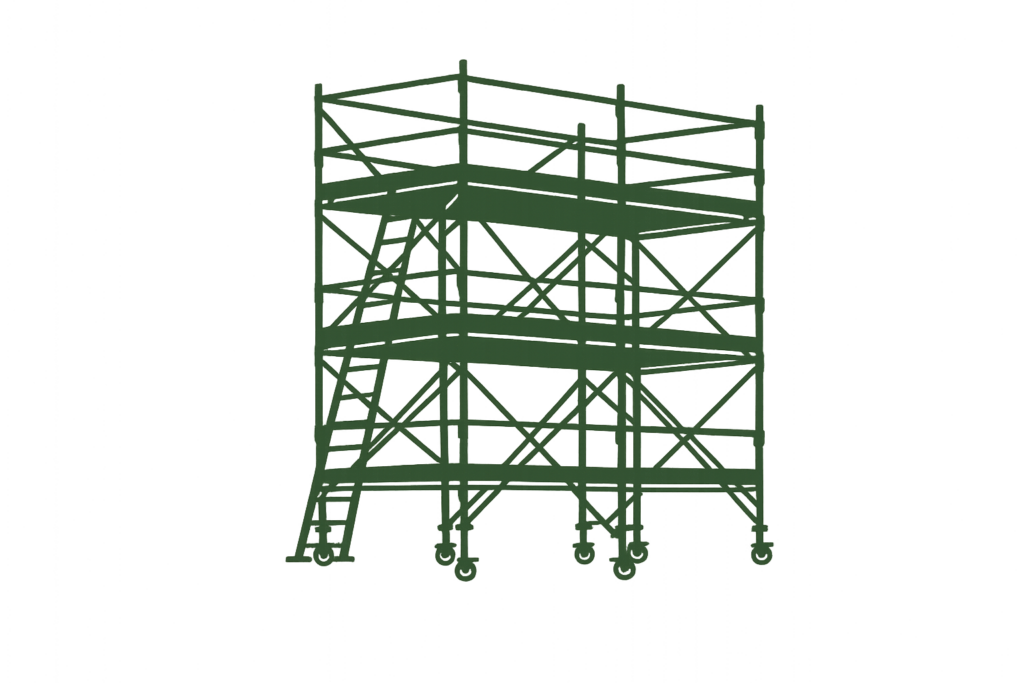
Typical Scaffold Weight Ranges

Estimated self-weight ranges for common scaffolding setups. Guide figures only and based on standard configurations, boarded lifts, and typical site requirements.

Gable End Access

350kg – 650kg
Approx. 2 Lifts
Useful For Roof Access

Detached House Front

900kg – 1,500kg
Approx. 3 Lifts
Common Domestic Setup

Rear Elevation Scaffold

800kg – 1,350kg
Approx. 3 Lifts
Rendering & External Works

Solar Panel Access

700kg – 1,200kg
Approx. 2 to 3 Lifts
Safer Roof Access

Dormer & Loft Conversion

1,500kg – 2,600kg
Approx. 4 Lifts
Larger Access Requirement

Full House Wrap

2,500kg – 4,200kg
Approx. 4 to 5 Lifts
Heavier Full Perimeter Build

Frequently Asked Questions

The weight of scaffolding for a house in the UK depends on how much of the property needs to be covered, how high the scaffold needs to go, and how many boarded lifts are included. A smaller front elevation scaffold on a terrace will usually weigh far less than a full wrap around a detached house. Domestic scaffold weight, house scaffold load, and residential scaffold material totals all rise as the structure becomes larger and more involved.

When people look for scaffold weight, house scaffolding weight, or the weight of a scaffold for a home, they are usually trying to get a sensible estimate rather than one exact figure. A front scaffold, rear elevation scaffold, chimney access scaffold, or full house wrap can all come out very differently even where the houses seem similar from the outside. That is why one property may need a relatively modest amount of scaffold material while another requires a much heavier build.

The best way to think about scaffold weight is in ranges rather than fixed numbers. The total scaffold weight, the estimated weight of scaffold materials, and the likely self-weight of the structure all depend on run length, height, boarded lifts, platform width, and extras such as ladder bays or loading sections. A scaffold weight calculator helps narrow that range, but a project-specific design is still the best way to confirm the final figure.

The biggest influences on scaffold weight are length, height, number of lifts, platform width, and the type of scaffold being used. A scaffold that runs across a long elevation and rises over several storeys naturally needs more tubes, boards, braces, fittings, and access components than a smaller and simpler build. Because of that, the overall scaffold weight and the estimated material load can increase quickly once the dimensions start to grow.

Complexity matters as well as size. If the scaffold has to wrap around corners, bridge over a conservatory, include a loading bay, or form part of a temporary roof, the total weight usually increases. The weight of a straight run scaffold, the load from a full wrap, and the material total for a more complex access structure can be very different even if the height stays broadly similar.

The scaffold layout also has a major effect. A straight elevation scaffold will normally weigh less than an L-shape, and an L-shape will often weigh less than a full perimeter scaffold. That means scaffold configuration, boarded working lifts, and the overall shape of the access structure are just as important as the basic measurements.

A semi-detached house usually sits somewhere in the middle of the domestic scaffold weight range. The weight of scaffolding for a semi, the estimated load of a semi-detached scaffold, and the likely material total for access around one side plus the front or rear often come out higher than a terrace but lower than a detached house. The result depends on whether you need one elevation, two elevations, or a fuller wrap for roofing or outside works.

Many people looking for semi-detached scaffold weight are planning for roof repairs, chimney work, repointing, gutter replacement, solar access, or loft conversion work. In those situations, the scaffold weight changes not only with width and height but also with how many boarded lifts and extra sections are needed. A shorter access scaffold may stay relatively modest, while a broader build with more lifts can become much heavier.

It is also worth remembering that a semi-detached house can still create awkward scaffold requirements. Narrow side passages, sloping drives, conservatories, and neighbouring boundaries can all affect the layout and increase the amount of scaffold material required. So while semi-detached scaffold weight is often moderate, site conditions can push the estimate either way.

Detached house scaffolding is often heavier because there is more building to cover and more access area to work around. The weight of scaffolding for a detached house, the estimated load of a full detached scaffold, and the total material weight for larger domestic access systems all reflect the wider footprint and the greater amount of scaffold needed. A front-only setup may stay more manageable, but a full wrap can move into a much heavier bracket.

People often need detached house scaffolding for roofing, rendering, painting, solar panel access, fascia replacement, or larger repair work. These jobs usually call for longer runs, more lifts, and broader safe working platforms, which increases the overall self-weight of the structure. The more complete the access, the more substantial the scaffold material total tends to be.

A detached home can also produce a heavier scaffold simply because the layout is larger. In practical terms, detached house scaffold weight, home scaffold material estimates, and full access scaffold loads are usually based on scope rather than property label alone. A small detached bungalow may weigh far less than a complex two-storey semi with more difficult access and a broader scaffold arrangement.

Front-of-house scaffolding is often one of the lighter residential options because the access requirement is limited to a single elevation. The weight of a front scaffold, the estimated load of front elevation scaffolding, and the material total for basic domestic access can be much lower than a full wrap because fewer bays, boards, and structural components are needed. This type of scaffold is common for gutter work, roofline repairs, painting, and smaller maintenance jobs.

Even so, not every front scaffold stays light. If the frontage is tall, wide, or needs extra lifts and wider boarded platforms, the scaffold weight can still rise. The load from a front elevation scaffold, the estimated weight of a tall façade scaffold, and the total material requirement for front access all increase where more height, more width, or more protection is needed.

For planning purposes, it helps to think in terms of access scope. A small front scaffold for minor repair work may come out relatively modest, while a broad front elevation scaffold covering a large detached property can be much heavier. Front scaffolding weight, house-front scaffold load, and façade access material totals all depend on scale and layout.

Chimney scaffolding often weighs more than people expect because chimney access usually needs added height and a focused working platform in a more awkward position. The weight of chimney scaffolding, the estimated load of a chimney scaffold, and the material total for stack access all reflect the extra structure often needed to create a safe platform above roof level. Even on a smaller house, a chimney scaffold can involve more scaffold material than a simple low-level access section.

A chimney scaffold is commonly used for repointing, lead flashing repairs, chimney pot work, capping, rebuilding, and leak investigations. Because the work is concentrated in a difficult area, the scaffold contractor may need to build a structure that gives safe access above the roofline without reducing stability. That is why chimney scaffold weight, roof-stack access load, and chimney repair scaffold estimates can vary so much.

The final weight usually depends on the property type, roof shape, and ease of setup. A chimney on a straightforward house with clear access may come out lower than a stack on a taller property with awkward ground or limited space. So when comparing chimney scaffold weight estimates, it is important to compare like for like rather than treat every setup as the same.

Temporary roof scaffolding is normally one of the heaviest forms of scaffold because it combines access scaffolding with an overhead weather protection structure. The weight of a temporary roof, the estimated load of roof protection scaffolding, and the material total for covered scaffold systems are much higher because these builds need more framework, more support, and more overall coverage. They are designed to protect work from weather, but that extra protection comes with a much heavier scaffold build.

This kind of scaffold is often used for re-roofing, loft conversions, storm damage repair, and major refurbishment. Because the structure is larger and more involved, the weight of a temporary roof scaffold can rise well above the load of standard access scaffolding. Roof cover scaffold weight, scaffold roof material totals, and weather protection scaffold estimates all reflect that extra complexity.

The span, shape, and design all influence the result. A modest temporary roof over a smaller domestic area may stay manageable, while a wide-span covered scaffold on a larger building can carry a substantial amount of scaffold material. For that reason, temporary roof scaffold weight is best assessed on a case-by-case basis, with layout, coverage, and working height all taken into account.

Yes, scaffold height has a direct effect on the overall weight. As the structure gets taller, it needs more lifts, more standards, more ledgers, more braces, and usually more platform components as well. The higher the scaffold goes, the heavier the total structure becomes because extra materials are added throughout the build.

This matters on jobs that need access over several storeys, such as roofing, rendering, loft conversions, or larger repair work. Even if the run length stays the same, a taller scaffold can weigh much more than a lower one because each extra lift adds another layer of scaffold material. In many cases, the added height makes just as much difference as the width of the scaffold.

When comparing scaffold weight estimates, it is essential to look at the working height rather than just the footprint. Two scaffold setups may look similar at ground level, but if one rises much higher than the other, the overall weight of the structure can be very different.

Yes, scaffold shape can make a noticeable difference to the weight estimate. A straight run generally uses fewer materials than an L-shape, while a full wrap around a property usually weighs more again because it covers more of the building. The weight of a straight scaffold, the estimated load of an L-shaped scaffold, and the total material weight for a full perimeter build can vary a lot even when the height is similar.

Shape matters because it changes how many bays, boards, and structural sections are required. Once the scaffold starts turning corners or wrapping around multiple elevations, the amount of material increases across the whole layout. That means the scaffold self-weight goes up even before extras such as loading bays or netting are considered.

For planning purposes, scaffold shape should never be treated as a minor detail. Straight runs, corner returns, and full wraps all produce different scaffold weight results, which is why the calculator needs the actual layout rather than a rough visual guess.

Birdcage scaffolds are usually heavier because they rely on a denser internal grid of standards, ledgers, and transoms across a broader area. The weight of a birdcage scaffold, the estimated material load of an internal access birdcage, and the total self-weight of this type of structure are often higher than a simpler access scaffold because more components are needed throughout the build.

These scaffolds are commonly used for ceiling work, internal access, large open areas, and projects where a broad working platform is needed. Because the layout spreads across the floor area rather than along a single elevation, the amount of scaffold material can build up quickly. That is why birdcage scaffold weight often surprises people when compared with more standard access arrangements.

The final figure depends on the size of the area, the height of the scaffold, and the number of boarded lifts. A smaller birdcage may remain manageable, but a larger internal scaffold can become a substantial structure once the full grid and working platform are in place.

Loft conversion scaffolding is usually heavier than basic access scaffolding because the work often needs broader coverage and more complete roof-level access. The weight of loft conversion scaffolding, the estimated load for dormer access, and the material total for roof-level building work all reflect the need for stable platforms, longer runs, and enough space for trades to work safely.

These projects often involve more than one stage. Roof alterations, dormer framing, covering work, windows, and finishing tasks can all shape the scaffold layout and increase the amount of material required. That broader access arrangement increases the scaffold weight and can make the structure much heavier than a shorter repair scaffold.

If the project needs temporary roof protection as well, the weight rises again. Loft conversion scaffold weight, attic conversion access load, and dormer scaffold material totals therefore depend on how much of the roof is being changed, how large the scaffold needs to be, and whether weather protection forms part of the setup.

Commercial scaffolding is often much heavier than domestic scaffolding because the structures are usually larger, longer, taller, and more complex. The weight of commercial scaffolding, the estimated load of business access scaffold, and the material total for contractor-facing scaffold systems can be significantly higher where multiple lifts, long elevations, public interfaces, or specialist access requirements are involved.

Commercial projects often need more design input, more planning, and more scaffold material overall. A scaffold for a shopfront, office block, warehouse, school, or industrial building may include loading bays, fan protection, pedestrian management measures, or phased changes as the job progresses. These details all influence scaffold weight and increase the overall structure load.

That said, commercial scaffold weight is still driven by the same basics: size, height, boarded lifts, access, and complexity. The best way to assess commercial scaffold weight, business scaffold material totals, and contractor access load is through a detailed scope rather than a simple headline figure. The more clearly defined the requirement, the more useful the estimate becomes.

Difficult access does not always make the scaffold itself dramatically heavier, but it can change the layout and the amount of material needed. The weight of scaffolding for awkward access, the estimated load for restricted access scaffolds, and the material total for difficult installation work can all rise where the scaffold has to bridge obstacles, work around fragile surfaces, or follow a more complex route.

Examples include narrow alleyways, rear gardens with limited entry, steep driveways, conservatories, extensions, glass roofs, or neighbouring structures that reduce space. In these situations, the scaffold team may need to alter the design, create additional sections, or build around obstructions, which can increase the total structure weight compared with a simple open-site build.

What looks like a small job from the outside can therefore become a heavier scaffold project once access is assessed properly. Difficult-access scaffold weight, tricky-site scaffold material estimates, and restricted-entry scaffold loads are based on practicality rather than appearance alone.

Yes, boarded lifts increase scaffold weight because every boarded working level adds more boards and the support needed to carry them. The weight of scaffold boards, the total load from boarded lifts, and the estimated material increase from additional working platforms can make a noticeable difference to the overall scaffold weight, especially on larger or taller builds.

This matters where a scaffold includes multiple working levels rather than just one main platform. Roofing, rendering, pointing, and refurbishment jobs may all require more than one boarded lift, and each extra level adds another layer of materials across the scaffold run. That means the weight rises even if the footprint stays the same.

When using a scaffold weight calculator, boarded lifts should always be included as accurately as possible. A scaffold with one boarded lift can come out very differently from a scaffold with two, three, or more working levels, even where the layout otherwise looks similar.

Loading bays can add a meaningful amount of weight because they need extra scaffold components to create a stronger and more practical area for materials. The weight of a loading bay, the estimated load of a scaffold loading section, and the additional material total for a scaffold with a loading platform will usually be higher than a standard access-only scaffold.

This matters on jobs where materials need to be lifted and stored safely at scaffold level. Roofing work, loft conversions, larger refurbishment projects, and some commercial jobs often benefit from a loading bay, but that extra functionality comes with extra scaffold material. The result is a heavier overall build.

For planning purposes, loading bays should be treated as a separate addition rather than assumed to be included within a basic scaffold estimate. A scaffold with a loading bay can weigh noticeably more than the same structure without one.

Yes, debris netting increases scaffold weight, although usually by a smaller amount than major structural additions such as extra lifts or loading bays. The weight of debris netting, the added load from scaffold netting, and the extra material allowance for a netted scaffold all depend on how much of the scaffold face is being covered.

Even though netting is relatively light compared with scaffold tubes and boards, it still adds to the overall total. On a larger scaffold with several lifts and a long run, that extra weight can become more noticeable simply because the netting covers a wider area. This is why it is worth including netting in the weight estimate where it forms part of the scaffold setup.

For early planning, it is best to think of debris netting as an additional load rather than part of the standard scaffold structure. It may not transform a small scaffold, but it can still alter the overall estimate, especially on taller or broader builds.

There are ways to reduce the estimated weight of a scaffold, but the best approach usually comes from refining the design rather than simply stripping things back. Shorter runs, fewer boarded lifts, narrower platforms, and a simpler layout can all lower the overall scaffold weight. The estimated scaffold load, the total material weight, and the self-weight of the structure all become easier to manage when the scaffold is planned efficiently.

One of the most effective ways to keep the weight more controlled is to use only the access that the job genuinely needs. If the work can be completed with a straight run rather than a full wrap, or with fewer boarded lifts instead of full multi-level coverage, the amount of scaffold material required may reduce significantly.

It also helps to plan the layout clearly from the start. Reducing scaffold weight is usually about suitability and efficiency rather than cutting back on important safety features. A well-planned scaffold is often a better answer than a heavier build that provides more access than the job actually requires.

The best way to make a scaffold weight estimate more accurate is to enter measurements that reflect the scaffold you are actually planning. The run length, working height, boarded lifts, platform width, scaffold type, and extras all shape the final result. The more accurate those details are, the more useful the estimated scaffold weight becomes.

It also helps to think carefully about the full layout rather than just the main front elevation. Corners, returns, loading bays, ladder access, and netting can all affect the total. If these details are left out, the scaffold weight estimate may come out lower than the finished structure in real use.

A weight calculator works best as an early planning tool. It can give a strong guide, but a formal design or engineering review is still the right way to confirm the final scaffold build where exact loads and project-specific requirements matter.

A useful scaffold weight estimate should clearly reflect the main parts of the structure. The scaffold type, run length, working height, number of lifts, boarded platforms, and any important extras such as ladder bays, loading bays, or debris netting should all be taken into account. A clearer estimate makes scaffold planning much easier to understand.

It should also be obvious whether the figure is showing the self-weight of the scaffold only or whether it includes any further allowances. Without that distinction, comparing scaffold weight estimates becomes harder because one calculation may only cover the base structure while another may allow for more of the setup.

The most useful estimates are the ones that balance clarity with realism. A strong scaffold weight guide explains what is being counted, what is not being counted, and how the layout affects the total. That helps homeowners, builders, and contractors assess the scaffold more fairly and plan with more confidence.

The best way to compare scaffold weight estimates is to look beyond the headline number. Two scaffold calculations can look similar at first glance but represent very different structures once height, boarded lifts, platform width, scaffold type, and extras are reviewed. Real comparison means checking the scope of the scaffold rather than judging the total weight alone.

Start by checking whether each estimate covers the same elevations, the same height, and the same general purpose. A lower scaffold weight may simply refer to a smaller or simpler structure than the one you actually need. Likewise, one estimate may include ladder bays or netting while another leaves them out, which changes the true comparison.

It is also worth thinking about the purpose of the estimate rather than chasing the lowest number. The best scaffold weight guide is usually the one that matches the actual access requirement most closely, not just the one that produces the smallest total.

Choosing the right scaffold setup starts with looking at the work itself. A suitable scaffold should match the height, coverage, access needs, and working space required for the project. Good scaffold planning, practical access design, and sensible layout choices usually lead to a safer and more efficient structure than simply choosing the biggest setup available.

It also helps to think about how much access is really needed. A smaller straight run may suit one job perfectly, while another may need an L-shape, a full wrap, a birdcage, or temporary roof protection. Matching the scaffold type to the task is a major part of getting a realistic weight estimate and a practical build.

Finally, do not judge the setup on appearance alone. The right scaffold arrangement is the one that gives safe, workable access without adding unnecessary complexity. A more suitable design often produces a better result than a heavier scaffold that goes beyond what the project actually needs.