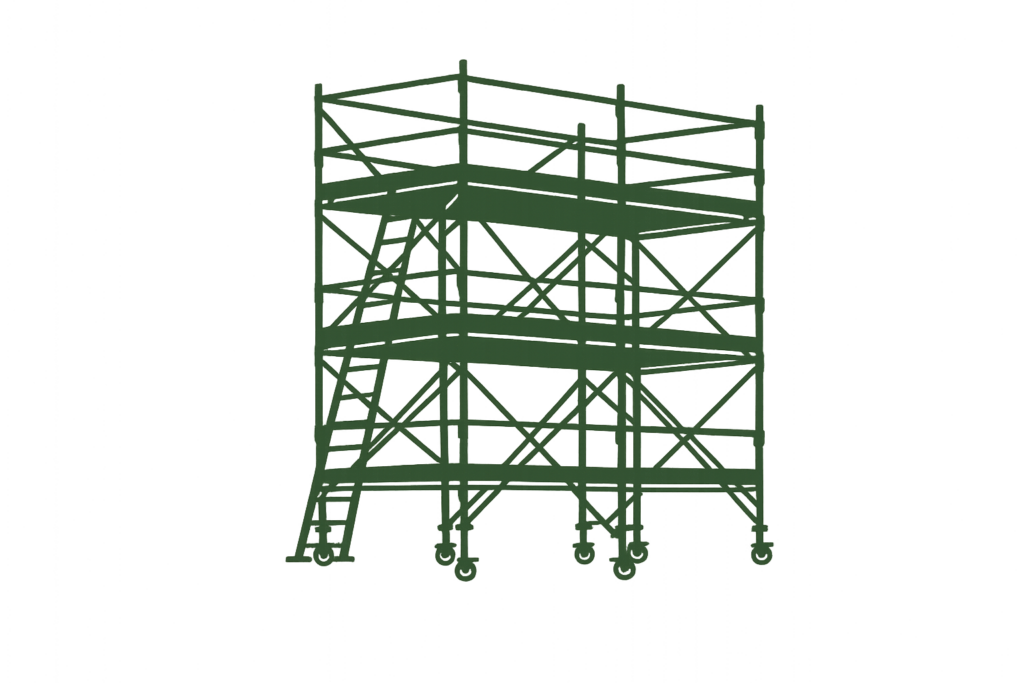
How Scaffold Loads Are Worked Out
Scaffold loading can increase quickly, particularly once workers, tools, and stored materials are introduced to the working platforms. While the structure itself has weight, the live load placed onto the scaffold during use is often the more important factor when planning safely. A scaffold load calculator helps provide an early estimate of how much load the scaffold may need to support before detailed design or engineering checks take place.
For most scaffolds, the overall load is influenced by platform size, working height, duty class, and how the scaffold will actually be used. A simple access scaffold with one or two operatives will normally create a lighter loading demand, while projects involving roofing materials, brickwork, or refurbishment work can increase the expected load significantly. The more people, tools, and materials introduced, the higher the loading requirement becomes.
What Has the Biggest Effect on Scaffold Loads?
One of the main influences on scaffold loading is the intended use of the platform. Light inspection or access work usually produces lower loading requirements, while construction, roofing, or material storage increases the demand placed on each lift. Even a small change in how the scaffold is used can alter the load expectations considerably.
Platform size also plays a major role. Larger working areas allow more materials to be stored and more operatives to work at the same time, which increases the potential loading. Wider boarded lifts, additional working platforms, and loading bays can all contribute to higher load demands, meaning two scaffolds of similar height may still require very different loading allowances.
Typical Load Differences for Common Scaffold Setups
Different types of scaffolding can carry very different loading requirements depending on how they are used. A light access scaffold used for inspection or painting will normally fall within a lower duty range, while scaffolds used for brickwork, roofing, or refurbishment projects tend to require higher loading allowances.
Temporary roof scaffolds, loading bays, and scaffolds supporting stored materials often require greater load capacity because they are designed to handle additional weight during the project. By comparison, smaller independent scaffolds used for limited access work usually place far less demand on the working platforms. This is why a load calculator works best when it reflects the real site conditions rather than a rough assumption.
How Height, Platform Area, and Usage Affect Load
As scaffold height and platform area increase, the potential loading often rises as well. Taller scaffolds can involve more working levels, while longer runs create larger working areas where materials may be stored. When multiple lifts are used at the same time, the overall loading across the scaffold can increase further.
The type of work being carried out also has a direct impact. Projects involving heavy materials such as bricks, tiles, or equipment typically require higher loading allowances. Even smaller projects can generate significant loading when tools, materials, and operatives are all working from the same platform. This is why load planning is an important part of early scaffold design.
Why a Scaffold Load Calculator Is Useful
A scaffold load calculator provides a practical estimate during the early planning stage. It helps give a clearer idea of how much load the scaffold may need to support based on expected usage, platform size, and working conditions. This can help guide decisions around scaffold layout, duty class, and overall planning before detailed design work begins.
It is important to remember that a calculator provides guidance rather than a full structural assessment. It does not replace engineering checks, tie requirements, wind loading calculations, or project-specific design. However, it is still a helpful way to understand how different factors influence scaffold loading before the scaffold is built.
Keeping Load Estimates More Realistic
To achieve a more useful estimate, it helps to enter values that closely reflect how the scaffold will actually be used. Considering the number of operatives, expected materials, and working platform size will always give a more reliable guide than broad assumptions. Planning for potential loading rather than minimum requirements can also help improve safety.
A scaffold load calculator works best as an early planning tool. It helps create a clearer understanding of how working conditions, platform size, and usage can influence loading demands. This makes it easier to prepare properly and move forward with more detailed scaffold design when required.