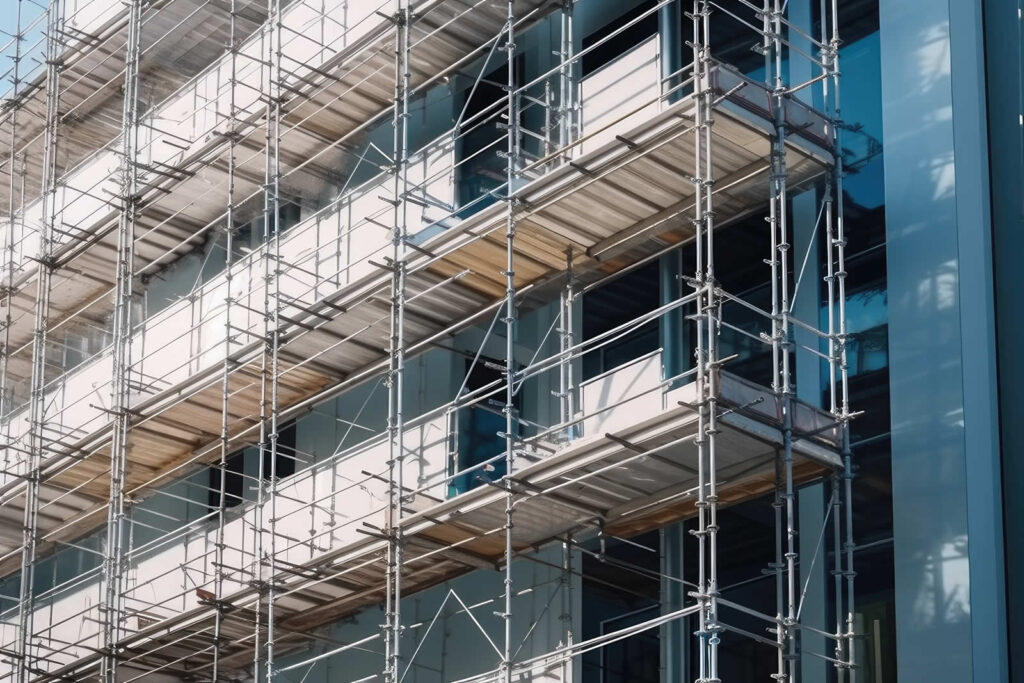
If you are planning work on your home, one of the first questions you will ask is simple: how long will the scaffolding take to go up?
You are not just asking out of curiosity. You want to know how your day will look, when work can start, how long disruption will last, and whether delays will cost you money. Scaffolding sits right at the start of most exterior jobs, so the timing matters more than people expect.
The short answer is that most domestic scaffolding jobs take anywhere from a few hours to a full day to erect. But that answer on its own does not help you make a decision or plan properly. The real answer depends on your property, the type of scaffold, the access, and the team doing the work.
In this guide, you will get a clear, realistic view of how long scaffolding takes to put up, what affects the timing, and how you can avoid delays.
How long does scaffolding usually take to erect?
For a typical house in the UK, scaffold erection usually falls into one of these ranges:
- Small access scaffold (front of house): 2 to 4 hours
- Two-storey semi-detached (one side): 3 to 6 hours
- Full wrap around a house: 6 to 8 hours
- Larger or complex structures: 1 to 2 days
If your job is straightforward, you will often see a team arrive in the morning and finish before the afternoon. In many cases, roofers or builders can start work the same day.
But it is important to understand that these are averages. Two houses that look similar from the street can take very different amounts of time once the scaffolders start working.
Why does scaffolding time vary so much?
The time it takes to put up scaffolding depends on a few key factors. Once you understand these, the estimates you get will make much more sense.
What size and type of scaffold do you need?
The more structure you need, the longer it will take. A simple tower or front elevation scaffold is quick because it uses fewer components and requires less planning.
A full wrap around scaffold, on the other hand, needs:
- More standards, ledgers, and boards
- More ties into the building
- More safety features such as guardrails and toe boards
Each of these adds time. Even a small increase in height can slow things down because the team has to build lift by lift.
How easy is access to your property?
Access is one of the biggest hidden factors.
If scaffolders can park close to your house and carry materials straight to the build area, the job moves quickly. If they have to carry poles through a narrow alley, over a garden, or around obstacles, everything slows down.
You might not think this matters much, but it can easily add one or two hours to a job.
Is the ground level or uneven?
Flat ground allows scaffolders to set base plates quickly and keep everything level as they build up.
Uneven ground, sloped driveways, or soft surfaces mean extra work. The team may need to use adjustable base jacks, boards to spread load, or extra stabilisation.
That extra preparation takes time, but it is essential for safety.
Does your scaffold need a permit?
If any part of the scaffold goes onto a public pavement or road, a permit from the local council is usually required.
This does not affect the physical build time on the day, but it can delay when the scaffold can be installed. In some areas, permits can take several days to arrange.
If you are on a busy street, you may also see traffic management added, which can slow down setup slightly.
How experienced is the scaffolding team?
An experienced team works faster, but more importantly, they work efficiently.
They know how to:
- Plan the structure before unloading
- Position materials to reduce movement
- Build safely without stopping and reworking sections
A less experienced team may still complete the job correctly, but it will often take longer.
Can scaffolding be put up in one day?
In most domestic cases, yes.
If your property is a standard two-storey house and the scaffold is not overly complex, the job will usually be completed within a single day. Many jobs finish within half a day.
This is why scaffolding rarely becomes the main delay in a project. It is usually one of the quicker stages.
Where you may see longer timelines is with:
- Large detached homes
- Commercial buildings
- Complex roof structures
- Restricted access sites
In those cases, the build may extend into a second day.
What happens during the scaffolding setup process?
Knowing what actually happens on the day helps you understand where the time goes.
When the team arrives, they do not start building straight away. There is a short setup phase.
First, they assess the site. They check ground conditions, confirm the layout, and make sure access is safe.
Next, they unload materials. This often takes longer than people expect, especially if the job needs a large amount of equipment.
Then the build begins. The scaffold is erected in stages:
- Base plates and first lift are set
- Vertical standards are added
- Ledgers and transoms are fixed in place
- Boards are laid to create working platforms
- Guardrails and safety features are installed
The team works upwards, lift by lift, until the required height is reached.
At the end, they carry out safety checks to make sure everything is secure before anyone uses it.
How long does it take to take scaffolding down?
Dismantling is usually faster than erection.
For most domestic scaffolding, removal takes between 2 and 6 hours, depending on the size of the structure.
The process is more straightforward because the structure is already in place. The team works from the top down, removing components in reverse order.
However, removal can still be delayed if:
- Access is restricted
- Materials need to be carried long distances
- Weather conditions are poor
Does weather affect how long scaffolding takes?
Yes, it can.
Scaffolding is outdoor work, and safety always comes first. High winds, heavy rain, or icy conditions can slow down or stop work entirely.
If conditions are not safe, the team may delay the build or pause until it improves. This does not happen often, but it is something to be aware of, especially in winter.
How can you make scaffolding installation faster?
You cannot control everything, but there are a few simple steps you can take to help the process move smoothly.
Make sure access is clear before the team arrives. Move cars, garden furniture, or anything that could block the work area.
If you have side access, make sure gates are unlocked and pathways are free of obstacles.
If you know a permit is required, confirm that it has been arranged in advance.
These small steps can save time and help the team finish the job without delays.
How does scaffolding timing affect your project?
Scaffolding often sits at the start of jobs like roofing, painting, or chimney repairs. If it is delayed, everything else shifts with it.
But in most cases, the installation itself is not the problem. The bigger delays tend to come from scheduling, weather, or availability of trades.
Once the scaffold is up, your project can move forward without interruption.
Should you worry about how long scaffolding takes?
In most situations, no.
For a standard home, scaffolding is a quick process compared to the work that follows. It is usually completed within a day, often within a few hours.
The more important thing is not just speed, but safety and reliability. A well-built scaffold gives you peace of mind and allows work to continue without risk.
How can a scaffolding cost calculator help you plan better?
If you are trying to plan a job, timing is only part of the picture. Cost matters just as much.
A scaffolding cost calculator gives you a rough estimate based on your property size, the type of scaffold you need, and your location.
This helps you:
- Set a realistic budget
- Understand how project scale affects scaffolding cost
- Compare quotes with more confidence
When you combine a time estimate with a cost estimate, you get a much clearer picture of what your project will involve.
Instead of guessing, you can plan properly and avoid surprises.
Final thoughts
If you are asking how long scaffolding takes to put up, you are really asking how quickly your project can begin.
In most cases, the answer is reassuring. For a typical home, scaffolding goes up in a matter of hours, not days. Even larger jobs are usually completed within one or two days.
The key is understanding what affects the timing and making sure your site is ready.
Once the scaffold is in place, everything else becomes easier. Work can start, access becomes safe, and your project moves forward with confidence.
If you want a clearer idea of both time and cost, use a scaffolding cost calculator to get a tailored estimate for your property. It is one of the simplest ways to turn uncertainty into a plan you can act on.
When you know what to expect, the whole process feels more straightforward. That is what most people want before they start any work on their home.