You know you need scaffolding, but the moment you start looking into it, the whole thing becomes more confusing than expected. Supported scaffolding. Mobile towers. Cantilever scaffolding. Suspended scaffolding. Birdcage scaffolding.
Suddenly, what seemed like a simple access solution feels like a technical decision you do not want to get wrong.
And you are right to take it seriously. Scaffolding is not just about getting people higher off the ground. It is about giving workers safe, stable, practical access to the exact area they need to reach, whether that is a house exterior, a roofline, a shopfront, a ceiling, or a large commercial building.
The right type of scaffolding depends on the job, the height, the building, the ground conditions, and how long the work will take. A small indoor repair may only need a scaffold tower. A roofing project may need supported scaffolding. Work on a tall building may need suspended scaffolding. And if the ground below cannot support a standard structure, you may need something more specialised.
In this article, you will learn the main types of scaffolding, what each one is used for, and how to get a clearer idea of which option may suit your project.
What is scaffolding used for?
Scaffolding is a temporary structure used to give workers safe access to areas they cannot easily reach from the ground.
That might sound simple, but scaffolding does more than just provide height. It gives workers a stable platform to stand on, space to move, room for tools and materials, and safer access around the working area.
Scaffolding is commonly used for:
- Building work
- Roof repairs
- Chimney repairs
- Painting and decorating
- Rendering and plastering
- Window installation
- Brickwork
- Gutter repairs
- Cladding work
- Structural inspections
- Commercial maintenance
- Restoration projects
The type of scaffolding you need depends on the job itself. Working on the side of a house is very different from repairing a ceiling inside a hall. Painting a shopfront is different from maintaining the outside of a tall building.
That is why there are several types of scaffolding. Each one solves a different access problem.
Supported scaffolding
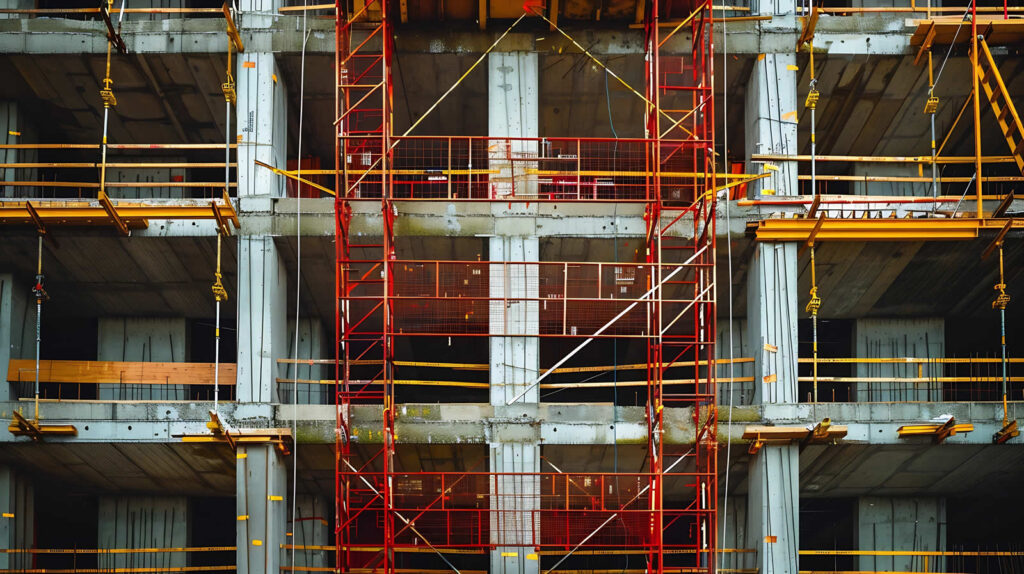
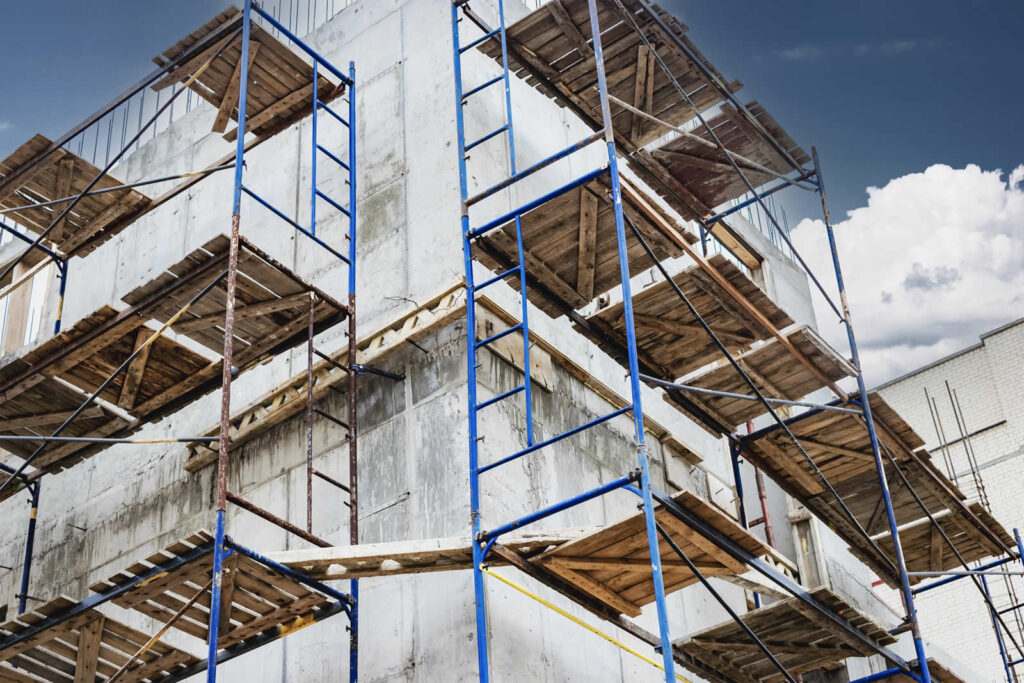
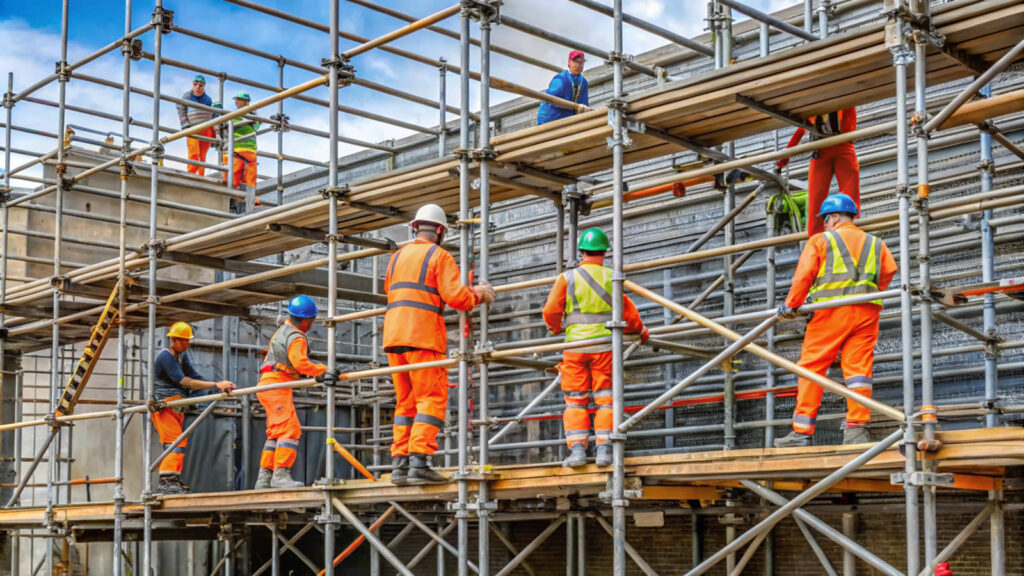
Supported scaffolding is one of the most common types of scaffolding.
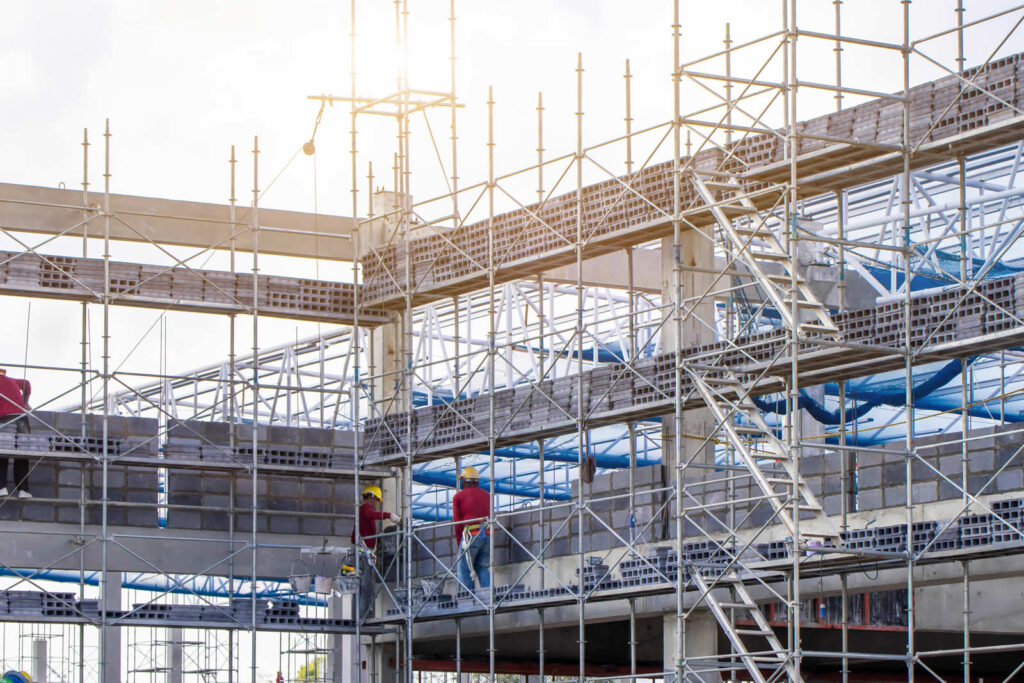
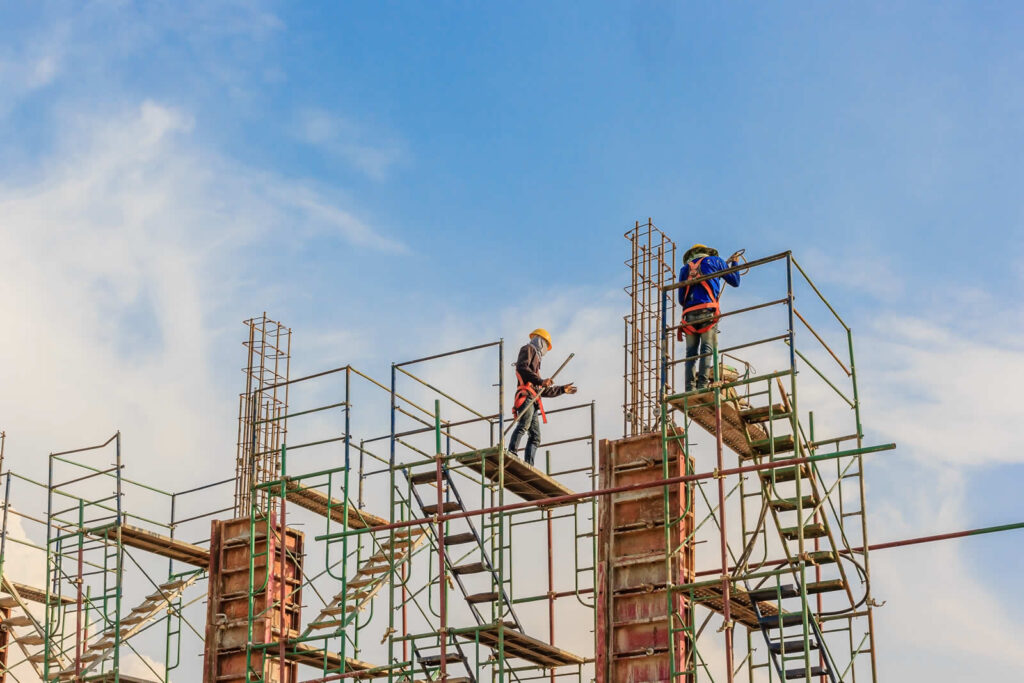
This is the type most people picture when they think of scaffolding. It is built from the ground up using standards, ledgers, transoms, boards, and braces. In simple terms, it is a fixed structure that stands on the ground and creates working platforms at different heights.
Supported scaffolding is often used for domestic, commercial, and construction projects because it is strong, flexible, and suitable for many types of work.
You might use supported scaffolding for:
- Roof repairs
- Brickwork
- Rendering
- Painting exterior walls
- Gutter and fascia work
- Window replacement
- General building work
- Extensions
- Chimney repairs
The main benefit of supported scaffolding is stability. Because it is built from the ground, it can provide a secure working platform for longer projects or jobs where workers need regular access to different parts of a building.
It is often the best choice when the ground is suitable, the building has clear access around it, and the work needs more than a quick ladder-based solution.
For example, if you are having the outside of your home rendered, supported scaffolding would usually make sense. Workers need room to move, carry tools, apply materials, and work across the whole surface safely. A ladder would not give them the same level of access or stability.
Independent scaffolding
Independent scaffolding is a type of supported scaffolding that stands on its own, rather than relying heavily on the building for support.
It is usually built with two rows of vertical standards. One row sits closer to the building, and the other sits further away. This creates a stable platform that can be used for work on walls, façades, roofs, and other external areas.
Independent scaffolding is commonly used when workers need access to the outside of a building but the scaffold should not depend on the structure itself.
It is often used for:
- External painting
- Rendering
- Brickwork
- Stonework
- Roofing access
- Façade repairs
- Window replacement
- Property maintenance
The key benefit is that it gives safe access without placing too much reliance on the building. This can be useful if the wall is fragile, listed, damaged, or unsuitable for supporting a scaffold.
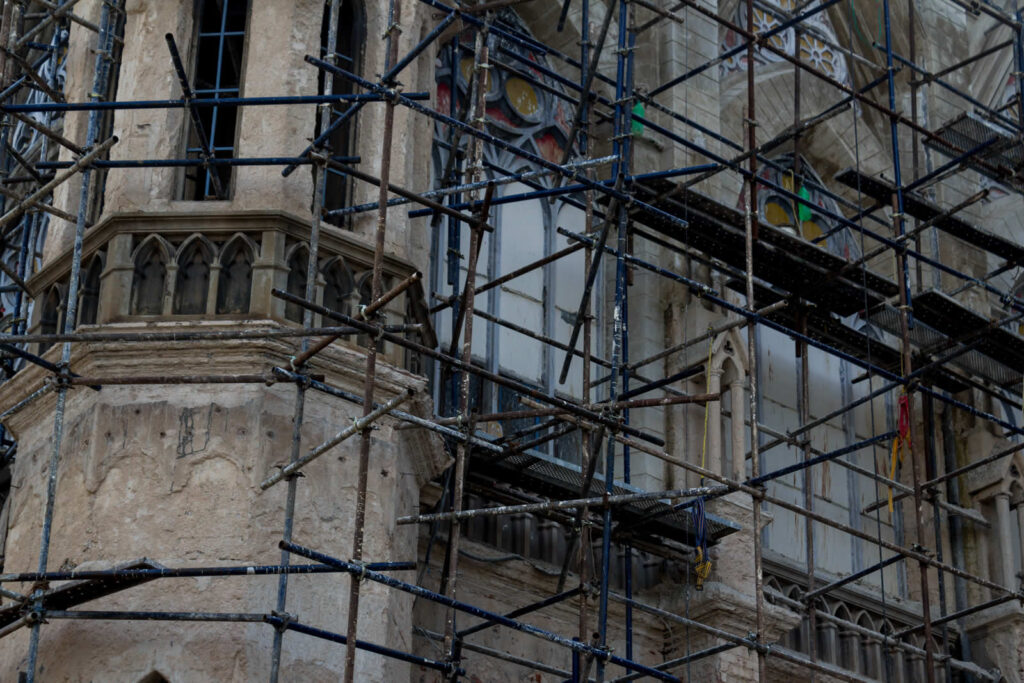
For example, if work is being carried out on an older building with delicate brickwork, independent scaffolding may be a better option because the scaffold can be designed to stand securely without putting unnecessary pressure on the structure.
Putlog scaffolding
Putlog scaffolding is another traditional type of scaffolding, often associated with brickwork.
Unlike independent scaffolding, putlog scaffolding usually has one row of standards placed away from the building. The other side of the platform is supported by the building itself. This is done using horizontal members called putlogs, which are built into or placed against the wall.
Putlog scaffolding has historically been used for:
- Bricklaying
- Masonry work
- Wall construction
- External repairs
Its main advantage is that it can use fewer materials than independent scaffolding because one side is supported by the building. However, it is not suitable for every project.
Because it relies partly on the building, the structure must be strong enough and appropriate for this type of setup. On many modern projects, independent scaffolding is preferred because it gives more flexibility and does not depend as much on the wall.
Putlog scaffolding may still be useful in certain construction settings, but it needs careful assessment by a scaffolding professional.
Mobile scaffolding and scaffold towers
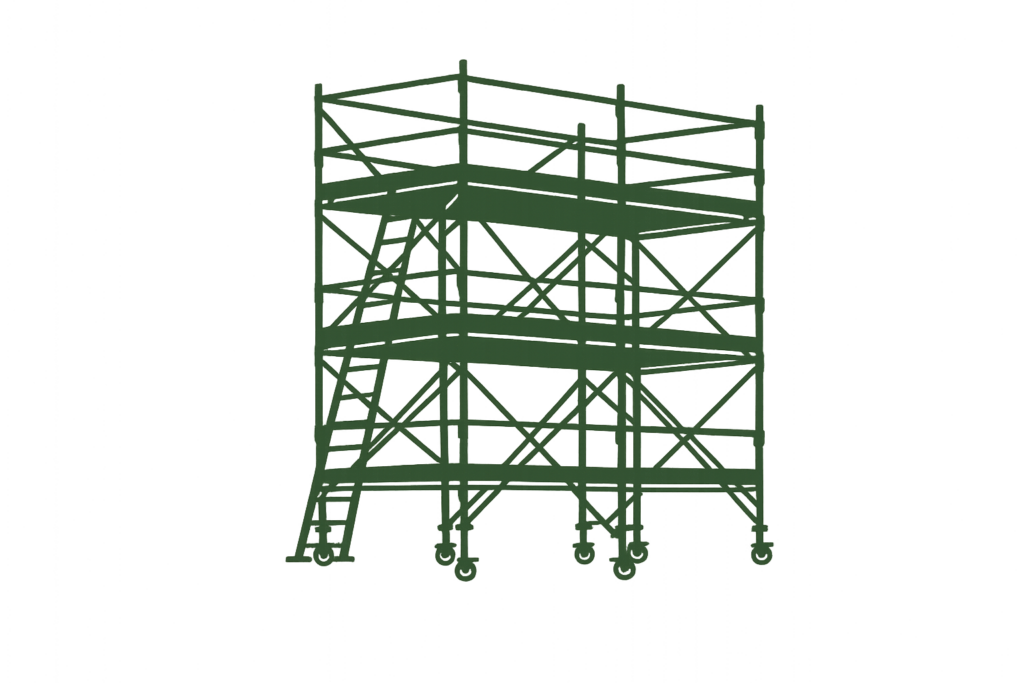
Mobile scaffolding, often called a scaffold tower, is a smaller access solution that can be moved from one area to another.
It is usually built on wheels or castors and is designed for jobs where workers need temporary access at height without a full fixed scaffold around the building.
Mobile scaffolding is commonly used for:
- Indoor maintenance
- Painting and decorating
- Ceiling repairs
- Electrical work
- Lighting installation
- Warehouse maintenance
- Shop fitting
- Short-term external work on level ground
The main benefit is flexibility. If the job moves along a wall, ceiling, or open space, the tower can be repositioned without dismantling a full scaffold structure.
For example, if you are painting the inside of a commercial unit or repairing ceiling lights in a warehouse, a mobile scaffold tower may be more practical than fixed scaffolding.
That said, mobile scaffolding is not right for every job. It needs a suitable surface, proper setup, and safe use. It should not be treated as a casual alternative to professional scaffolding, especially outdoors or on uneven ground.
A scaffold tower can be a cost-effective option for small or short-term tasks, but only when the conditions are right.
Suspended scaffolding
Suspended scaffolding is hung from above rather than built from the ground up.
You often see this type of scaffolding on tall buildings, where it would be difficult or impractical to build a structure from the ground all the way to the working area. The platform is suspended using ropes, cables, chains, or other support systems, depending on the job and design.
Suspended scaffolding is commonly used for:
- Window cleaning on tall buildings
- High-rise maintenance
- Façade inspections
- External repairs
- Painting tall structures
- Cladding work
- Building restoration
The main advantage is that workers can access high areas without needing a full scaffold from the ground. In some cases, the platform can also be raised or lowered as needed.
For example, if work is being done on the upper floors of a high-rise building, suspended scaffolding may be far more practical than building a fixed scaffold from street level.
However, suspended scaffolding requires careful planning, proper installation, and strict safety controls. Because workers are supported from above, the system must be designed and checked by competent professionals.
It is a specialist option, not a general-purpose scaffold.
Cantilever scaffolding
Cantilever scaffolding is used when scaffolding cannot be safely or practically built from the ground.
Instead of standing directly below the working area, the scaffold is supported by beams or needles that project out from the building or another structure. This allows workers to access areas where the ground below is blocked, weak, restricted, or unsafe.
Cantilever scaffolding is often used when there is:
- A glass roof below
- A road or pavement underneath
- A narrow alleyway
- Weak or unsuitable ground
- An obstacle at ground level
- A structure that prevents standard scaffolding
- A need to keep access clear below
For example, imagine a building that needs repair above a busy entrance, conservatory, or fragile roof. You may not be able to build scaffolding directly from the ground without causing damage or blocking access. Cantilever scaffolding can help solve that problem.
This type of scaffolding is more complex than standard supported scaffolding. It needs careful design because the load is not transferred straight down to the ground in the usual way.
That means it should always be planned and installed by experienced scaffolders.
Trestle scaffolding
Trestle scaffolding is a simple, low-level access system supported by tripods, ladders, or movable frames.
It is usually used indoors or for lower-height tasks where a full scaffold is not needed. It is not designed for major high-level work, but it can be useful for smaller jobs that still need a stable working platform.
Trestle scaffolding is commonly used for:
- Indoor painting
- Plastering
- Decorating
- Ceiling work at lower heights
- Minor repairs
- Shop fitting
- Maintenance tasks
The main benefit is simplicity. It is quick to set up, easy to move, and practical for short-duration work at lower levels.
For example, if a decorator is painting a high section of an interior wall, trestle scaffolding may give them a better platform than a ladder. They can stand more comfortably, keep tools nearby, and move along the wall with less disruption.
However, trestle scaffolding has limits. It is not suitable for complex external work, high elevations, or jobs that need heavy materials.
Birdcage scaffolding
Birdcage scaffolding is used when workers need access across a large area, usually indoors.
It is made from a grid of vertical and horizontal scaffold components, creating one large working platform. Rather than giving access to one side of a building, it creates access across a whole space.
Birdcage scaffolding is commonly used in:
- Halls
- Churches
- Theatres
- Warehouses
- Atriums
- Large rooms
- Industrial buildings
- Public buildings
It is often used for ceiling work, lighting installation, plaster repairs, painting, and restoration.
For example, if work is needed on the ceiling of a church or theatre, workers need more than a small tower. They need a wide, stable platform that lets them move across the space safely. Birdcage scaffolding provides that.
The main advantage is coverage. It allows workers to access a broad area without constantly moving towers or ladders.
Because it can cover large internal spaces, birdcage scaffolding needs proper planning to make sure it is stable, safe, and suitable for the building.
Steel scaffolding
Steel scaffolding is one of the most widely used scaffolding materials in modern construction.
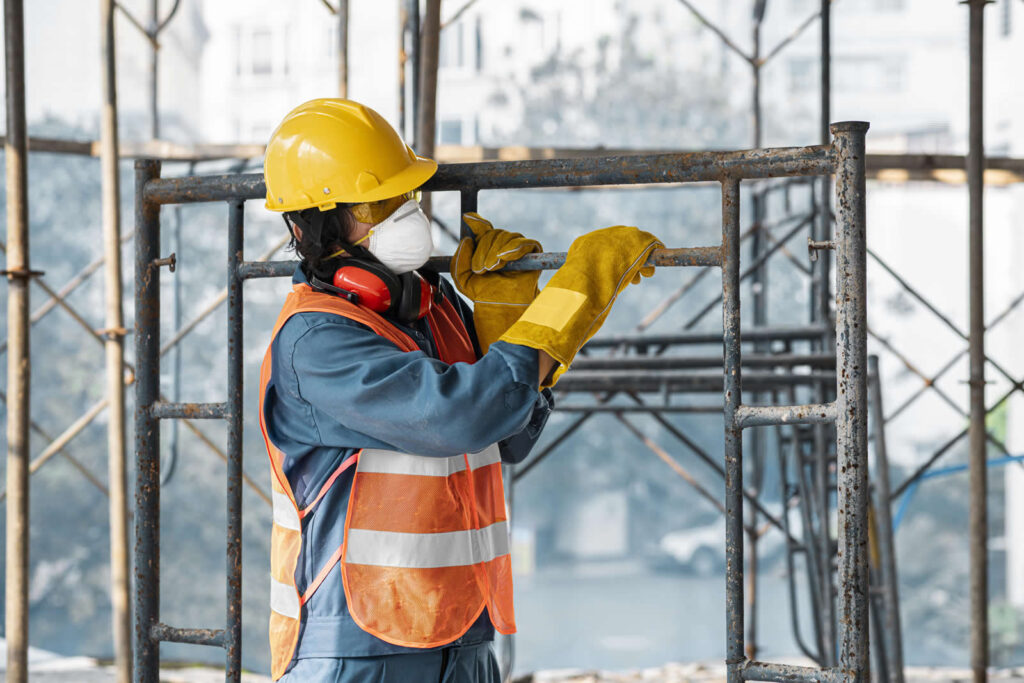
Rather than describing a specific scaffold layout, this refers to scaffolding made from steel tubes and fittings. Steel is strong, durable, and capable of supporting heavy loads when correctly designed and installed.
Steel scaffolding is used for:
- Construction sites
- Commercial buildings
- Domestic projects
- Industrial work
- External repairs
- Long-term projects
- Heavy-duty access requirements
The main benefit of steel scaffolding is strength. It can handle demanding site conditions and is suitable for a wide range of projects.
It is also durable, which makes it useful for projects where scaffolding needs to stay in place for longer periods.
For example, a large commercial refurbishment may need scaffolding that can withstand regular use, changing weather, and the movement of workers and materials. Steel scaffolding is often a strong choice for that kind of job.
System scaffolding
System scaffolding uses pre-engineered components that fit together in a set way.
Instead of using only individual tubes and fittings, system scaffolding uses standardised parts, such as vertical posts, horizontal ledgers, braces, and locking mechanisms. This can make it quicker to assemble and easier to adapt to certain shapes or layouts.
Common types of system scaffolding include ringlock, cuplock, and kwikstage systems.
System scaffolding is often used for:
- Large construction projects
- Industrial sites
- Commercial buildings
- Complex structures
- Repetitive layouts
- Temporary access platforms
- Staging and event structures
The main benefit is efficiency. Because the parts are designed to connect in a consistent way, system scaffolding can often be erected faster than traditional tube and fitting scaffolding.
It can also be useful on sites where the same type of scaffold bay needs to be repeated many times.
For example, on a large commercial building or industrial site, system scaffolding may help speed up installation while still providing strong, reliable access.
That said, it still needs proper design and installation. Faster does not mean casual. The scaffold must still be right for the site, the job, and the loads it needs to carry.
Which type of scaffolding do you need?
The right type of scaffolding depends on what you are trying to do.
There is no single answer that fits every project. A small repair to a ceiling does not need the same access as a roof replacement. A tall building does not need the same scaffold as a two-storey house. A clear, level driveway gives you different options from a narrow street or fragile surface.
Here are the main things that affect the choice.
The type of work being carried out
Start with the job itself.
If workers are repairing a roof, they need safe access to the roofline. If they are painting an exterior wall, they need a platform across the face of the building. If they are repairing a ceiling, they may need internal access across a wide space.
The work determines the access.
For example:
- Roofing often needs supported scaffolding.
- Indoor decorating may only need trestle scaffolding or a tower.
- High-rise maintenance may need suspended scaffolding.
- Ceiling repairs in a large hall may need birdcage scaffolding.
- Work above an obstruction may need cantilever scaffolding.
The height of the work
Height matters because the higher the work, the more important stability, access, and fall protection become.
A low-level indoor job may only need a simple platform. A two-storey exterior job may need fixed scaffolding. A tall building may need a more specialist access system.
This is where people often underestimate the job. They may think, “Can’t I just use a ladder?”
Sometimes a ladder is fine for very short, simple tasks. But if workers need both hands free, space for tools, or access for more than a few minutes, scaffolding is usually safer and more practical.
The ground conditions
Scaffolding needs a stable base.
If the ground is flat, solid, and accessible, supported scaffolding may be straightforward. But if the ground is uneven, weak, sloped, restricted, or blocked by an obstacle, the setup may need to be adapted.
This is one reason a site assessment matters. The scaffolding company needs to understand not just the building, but the surface around it.
For example, scaffolding built on a driveway is different from scaffolding near a basement, over a glass roof, or beside a busy pavement.
The space available
Some sites have plenty of room. Others are tight, awkward, or busy.
If there is limited space around the building, the scaffold may need a more careful design. Narrow alleyways, public footpaths, roads, neighbouring properties, and entrances can all affect the setup.
In some cases, you may need cantilever scaffolding or another specialist approach to keep the area below clear.
How long the work will take
Short jobs and long jobs often need different solutions.
For a quick indoor repair, a scaffold tower may be enough. For a roof replacement or external renovation lasting several weeks, a fixed scaffold is usually more suitable.
Duration matters because workers need safe access for the whole job, not just the first day.
A setup that feels acceptable for a quick task may become unsafe or impractical if the job takes longer than expected.
The number of workers and materials
Scaffolding must be suitable for the people, tools, and materials it needs to support.
A small platform for one person with hand tools is very different from a scaffold used by several workers carrying materials. The more load involved, the more important the scaffold design becomes.
This is why you should never choose scaffolding based on appearance alone. Two scaffolds may look similar, but they may be designed for very different loads.
Why professional advice matters
It is useful to understand the different types of scaffolding, but you should not have to make the final decision alone.
A competent scaffolding professional will look at the project, the building, the ground, the access points, the height, the load requirements, and the risks involved. From there, they can recommend the safest and most practical option.
This matters because scaffolding is not just equipment. It is a safety system.
The wrong type of scaffolding can create problems such as poor access, unstable platforms, delays, unnecessary costs, and serious safety risks.
Professional advice helps you avoid those mistakes.
It can also help you avoid paying for more than you need. Sometimes a full scaffold is the right answer. Sometimes a scaffold tower, trestle scaffold, or smaller access setup is enough. The right provider should help you find the safest option for the job, not simply the biggest one.
Conclusion
Scaffolding comes in different types because different jobs create different access problems.
Supported scaffolding is common for building work, roofing, rendering, and repairs. Independent scaffolding gives stable external access without relying too heavily on the building. Putlog scaffolding can be used for certain masonry jobs. Mobile towers are useful for shorter tasks. Suspended scaffolding helps with tall buildings. Cantilever scaffolding solves access problems where the ground cannot be used. Trestle scaffolding works well for lower-level indoor jobs. Birdcage scaffolding gives access across large internal spaces. Steel and system scaffolding offer strength, structure, and efficiency across many modern projects.
The best choice depends on your project, your building, your site conditions, and the work being carried out.
The safest next step is to get your project assessed by an experienced scaffolding company. That way, you get the right access solution from the start, and the work can be carried out safely, efficiently, and with fewer surprises.